
During the fall of 2025, I continued my summer internship through the end of November with the Corporate Development team at Constellation Brands. My primary assignment was to build a financial model for a company we were evaluating as a potential investment opportunity. The project required attention to detail and thoughtful analysis.
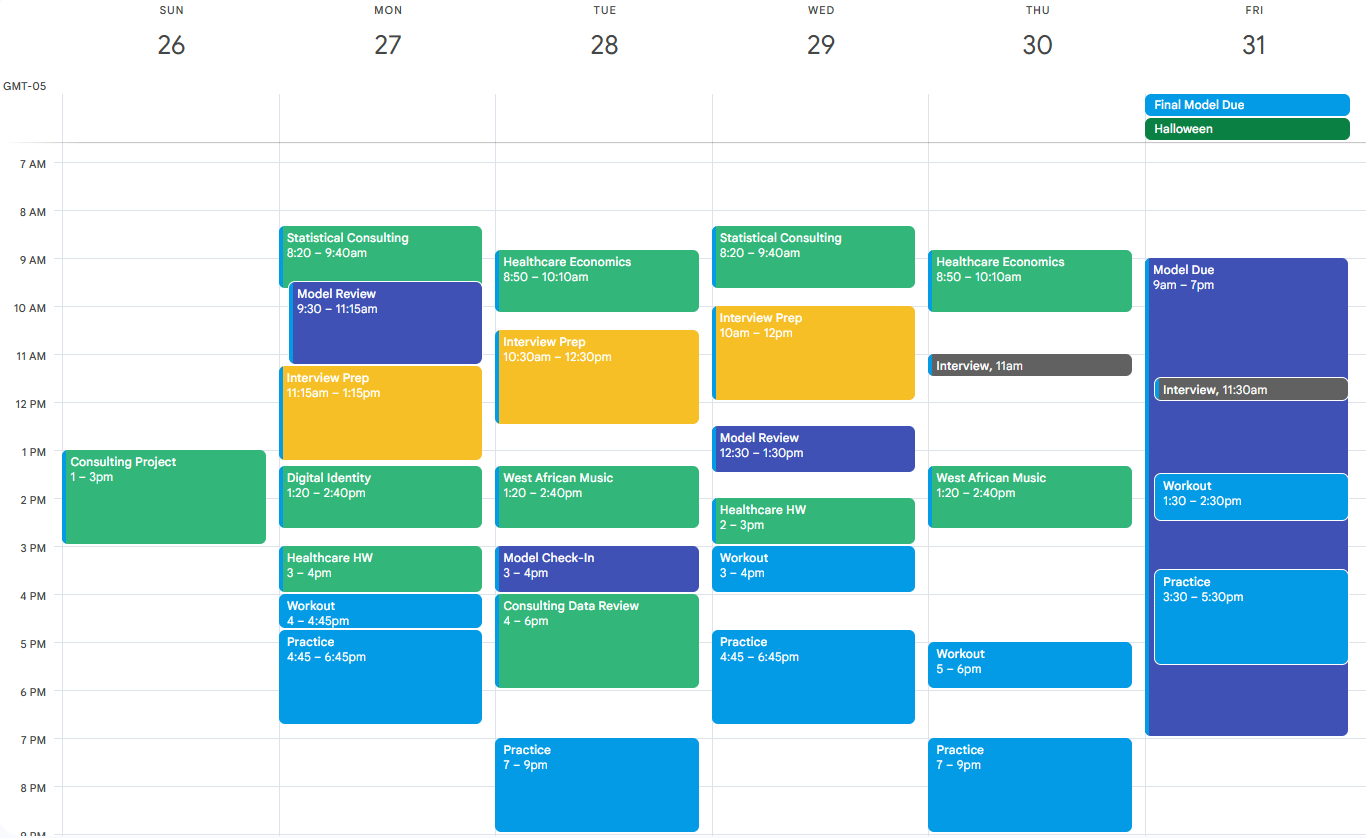
On top of my academic workload and responsibilities as a member of the hockey team, I had to find 10–12 hours each week to dedicate to the internship. Every Sunday, I sat down with my schedule to map out my responsibilities and ensure I blocked enough time to complete all tasks. I used the Tasks app in Google Workspace to track deadlines and plan what I needed to accomplish each day.
The week my deliverables were due, hockey practice had officially started, and I had two interviews to prepare for. I knew every minute mattered. Drawing on past experience working under tight deadlines, I broke my responsibilities into smaller, manageable milestones. Each day, I set aside two-hour work blocks for each priority. I made sure to keep my coworkers informed about my availability and overall schedule so our expectations were aligned.
The biggest takeaway from this experience was the importance of proactive communication. My team appreciated the transparency, and it allowed us to plan meetings and review sessions efficiently, so everything was completed on time. This experience strengthened my ability to balance multiple commitments while staying organized, accountable, and collaborative, and helped give me confidence in my ability to handle high-pressure and stressful periods in both academic and professional settings.