
Data Visualization in the Age of AI

During the Fall 2024 semester, I took a psychology course built entirely around one major project. We were free to pursue any topic as long as it involved data analysis, so I chose to explore data visualization using artificial intelligence—a direction inspired by the rapidly evolving role of AI in the world.

The early stages of my project involved a lot of trial and error as I experimented with different datasets to understand what ChatGPT could reliably interpret and visualize. Pushing these boundaries on my own was eye-opening, especially when I discovered limitations such as the model’s cell cap for Excel files—going even one cell over often caused it to generate inaccurate values.

I met weekly with my professor to discuss progress, challenges, and potential next steps. These meetings strengthened my problem-solving skills and taught me how to clearly present what I had accomplished and what I planned to tackle next.

The first phase of the project focused on basic visualizations—box plots, dot plots, bar charts—where ChatGPT performed well with consistent accuracy. But my ultimate goal was to generate a heat map of the United States, and that proved far more difficult. None of the AI tools I tested could create a fully accurate map; while the general shape of the U.S. appeared correctly, the state labels were often wrong or replaced with nonsensical text. I’ve continued revisiting this challenge as AI capabilities improve, and recently was able to successfully map the data.

Building a Band From Scratch

I’ve always loved music. Growing up, I played piano and string bass in orchestra, but I never enjoyed it as much as I wanted to because I couldn’t play the songs I actually liked. During the Spring 2025 semester, two of my teammates mentioned they were starting a band, and I told them I had found an old electric bass in my closet and would bring it back to school. Since we all had similar tastes in music, we started talking about songs we wanted to learn and prepare together.

We each practiced our parts on our own, and once we got back to campus, we started booking practice rooms once a week. What we initially thought would just be something fun to do a couple of times a week quickly became more serious—after our first session, we sounded way better than expected and began looking into open mic nights around town. I originally thought we’d have to go through every song bit by bit, but because everyone came so prepared, our parts fit together easily. The only things we really needed to work on were timing and speed.

Playing Live for the First Time

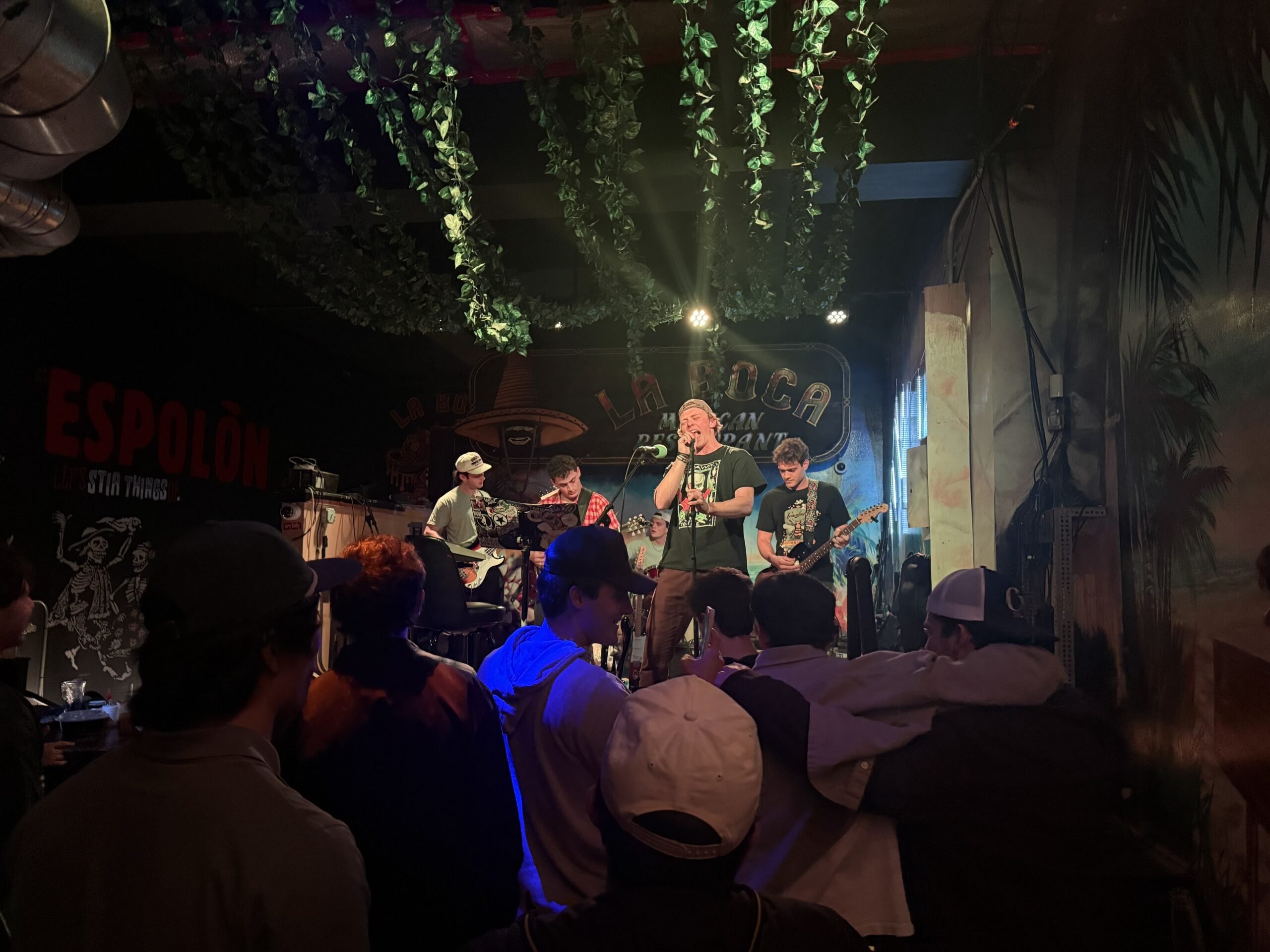
One Thursday that spring, we decided to play three of our songs at La Boca’s open mic. We spread the word, and our whole team and a bunch of friends showed up. We had low expectations since we were a brand-new band and most of us had little to no performing experience. I had never played electric bass before, but with my orchestra background, I knew I could pick it up. I spent extra hours teaching myself proper technique and practicing so I wouldn’t fall behind, and I’m glad I pushed myself outside my comfort zone.

Over the summer, we all kept practicing and learned a set of songs we agreed on for the fall. The biggest improvement since we started has been reading each other’s cues to stay in sync. We’re planning to play a lot more throughout the year, and being part of this band has become something I never expected to do but has been a great addition to my college experience.

css.php